
A second read on a Revit plan in a jurisdiction you do not know well
Working in an unfamiliar jurisdiction means rules you have not internalised — different egress distances, different accessibility requirements, a different idea of what counts as a habitable room. This gives a Revit plan a second read before it goes to a consultant: export the plan, name the project location, and get back a written review that references the rules that apply there rather than generic best practice.
Revit + pyRevit (free) -- no compiling
How the Revit plugin handles it
Keep the room information on
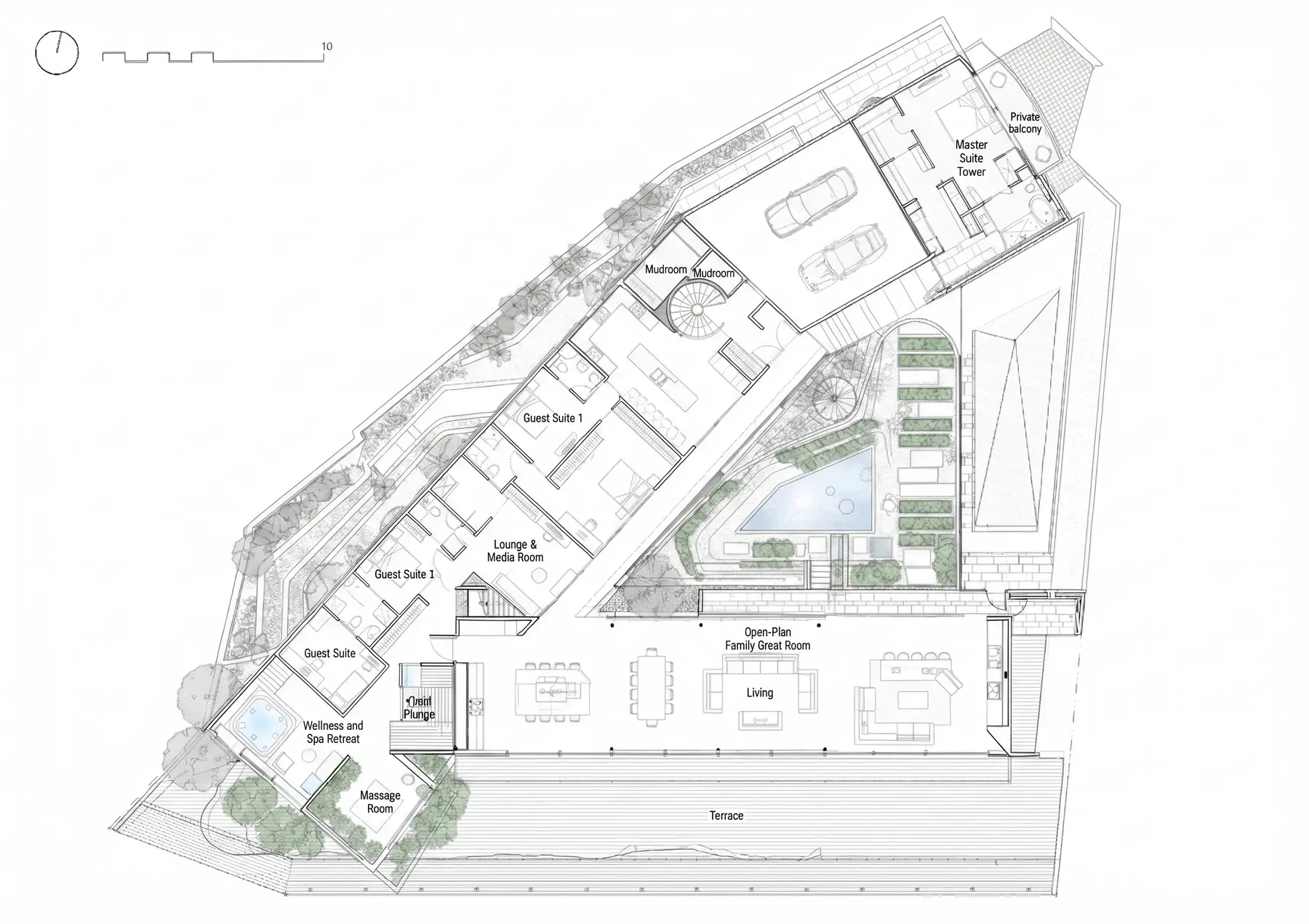
Unlike a plan sent for a render, a compliance read needs room names, door swings and key dimensions visible. Leave room tags and dimensions on in the view you send.
Send View on the plan
With the plan active, click Send View on the VotexArch ribbon tab and choose Compliance Audit. Save the PNG and attach it on the tab that opens.
Name the location precisely
Give the city and country, or the state where codes differ by state. The review is grounded to that location, so a vague one gets a vague answer.
What Revit hands over
A Revit plan exported as an image loses the model data — the review reads the drawing, not the BIM parameters behind it. That is why what is visible matters: a room tag the reviewer can read is a room it can check, and an untagged space is one it has to guess about.
The thing that goes wrong
The review can only check what the exported plan shows. Fire ratings, stair details and anything on another level are invisible to it, so a clean review of one plan is not a clean building. Treat silence on a topic as not checked, not as passed.
Do you preserve geometry?
Yes. Every render pass is constrained to your source geometry and camera position, so walls, proportions, and perspective stay locked instead of being reimagined by the model.
Models available for this
Every model draws from the same credit balance, and a credit is only spent on a successful generation.
- Chief Architect Review15 cr
- Gemini 4 Argon25 cr
Questions
- Does this replace a code consultant?
- No. It is a second read that helps you arrive at a consultant review better prepared. Every compliance decision still needs a qualified professional in that jurisdiction; the review is an aid to that, not a substitute for it.
- Why leave annotation on here when other tools want it off?
- Render tools read annotation as objects, so they want a clean drawing. A compliance review reads it as information — room names, widths, door swings — so the more of it is legible, the more the review can check.